Outdoor Lighting for Sunrise Manor NV Desert Yards
Desert yards in Sunrise Manor require outdoor lighting systems that can handle extreme temperature swings, constant dust exposure, and intense UV radiation while maintaining reliable performance year-round. Your lighting design needs to account for the unique challenges of Nevada's desert environment, from summer temperatures exceeding 115°F to winter lows that can damage poorly chosen fixtures.
Low Voltage Systems for Desert Durability
Low voltage landscape lighting offers the most practical solution for Sunrise Manor's harsh desert conditions. These systems operate at 12 volts instead of standard 120-volt household current, reducing heat generation and electrical stress on components. The lower voltage means less thermal expansion and contraction in wiring and fixtures, which prevents the connection failures common with standard voltage systems in extreme heat.
Transformers for low voltage systems should be rated for at least 25% more capacity than your total fixture load to prevent overheating during summer months. Position transformers in shaded areas or use models with built-in thermal protection. The reduced electrical load also means safer installation and maintenance, particularly important when working around irrigation systems and desert landscaping with sharp plants.
Quality low voltage fixtures use sealed LED drivers and weatherproof housings that resist dust infiltration. Look for fixtures with IP65 or higher ratings, which indicate complete protection against dust and resistance to water jets from any direction. This level of protection handles both desert dust storms and the occasional heavy rainfall that can occur in the Las Vegas valley.
Path Lighting for Desert Walkways
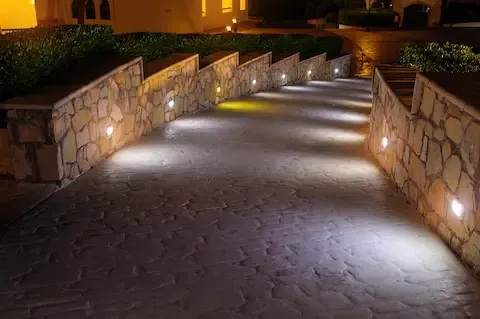
Path lighting in desert environments requires fixtures that can illuminate uneven terrain while withstanding sand abrasion and temperature extremes. Install path lights every 6 to 8 feet along walkways, using fixtures with downward-facing shields to reduce glare and light pollution. The shields also protect the LED elements from direct exposure to blowing sand and debris.
Choose path fixtures with heavy-duty construction materials like cast aluminum or stainless steel rather than plastic housings that become brittle in UV exposure. Fixtures should sit flush with or slightly above ground level to prevent sand accumulation around the base, which can block light output and create maintenance issues.
Consider the color temperature of your path lighting carefully. Warmer light temperatures around 2700K to 3000K provide better visibility in dusty conditions and create less insect attraction than cooler whites. This is particularly important in Sunrise Manor where desert insects can swarm around light sources during certain times of year.
For effective path lighting coverage, focus on Outdoor Lighting that creates overlapping pools of illumination rather than trying to flood entire walkway areas. This approach uses less energy while providing safer navigation and more attractive visual effects.
Uplight Fixtures for Desert Plants and Architecture
Uplighting showcases the dramatic forms of desert plants and architectural elements while creating depth and visual interest in your landscape. Position uplight fixtures to highlight specimen plants like palo verde trees, desert willows, or architectural agaves. The key is selecting fixtures with precise beam control to avoid light spillage into neighboring properties or the night sky.
Well lights installed at ground level work well for uplighting in desert settings because they stay protected from wind damage and are less visible during daylight hours. Choose models with adjustable beam angles so you can modify the lighting effect as plants grow or seasonal changes occur. The fixtures should have removable lenses for easy cleaning when dust accumulation reduces light output.
For uplighting taller elements like palm trees or building facades, use bullet-style fixtures mounted on ground spikes or hardscape elements. These fixtures offer better heat dissipation than buried well lights and can be easily repositioned as your landscape matures. Ensure the mounting hardware is galvanized or powder-coated to prevent corrosion from occasional moisture exposure.
LED uplighting fixtures should use optics designed specifically for the type of element you're illuminating. Narrow beam angles work best for tall, columnar plants like saguaro or ocotillo, while wider beams suit spreading shrubs and architectural walls.
Heat Management and Component Selection
Managing heat buildup is critical for outdoor lighting longevity in Sunrise Manor's desert climate. LED fixtures generate less heat than traditional bulbs, but even LEDs can fail prematurely if not properly managed in extreme temperatures. Choose fixtures with adequate heat sinking and thermal management features designed for high-temperature environments.
Avoid installing fixtures in areas where they'll receive reflected heat from pavement, walls, or large rocks during the day. These surfaces can remain hot well into the evening, adding thermal stress to lighting components. If installation near heat-reflective surfaces is unavoidable, use fixtures with higher temperature ratings and provide additional spacing for air circulation.
Wire connections require special attention in desert installations. Use only outdoor-rated wire nuts filled with dielectric grease, or better yet, use waterproof splice connectors designed for direct burial. Standard wire nuts can fail when temperature cycling causes expansion and contraction of metal components, leading to loose connections and potential fire hazards.
Timer and control systems should be housed in shaded locations with adequate ventilation. Mechanical timers can become unreliable in extreme heat, so consider electronic controls with thermal compensation or smart controllers that can be monitored remotely for performance issues.
Dust and Debris Protection Strategies
Dust accumulation on light fixtures reduces output efficiency and can cause overheating by blocking ventilation. Design your lighting layout to minimize dust collection by avoiding fixtures with horizontal surfaces that trap debris. Fixtures with sloped or curved tops shed dust more effectively than those with flat surfaces.
Regular maintenance schedules become more important in desert environments. Plan to clean fixture lenses and check connections at least quarterly, with additional attention during dust storm season. Use compressed air to remove dust from ventilation openings and heat sinks, and inspect gaskets and seals for deterioration from UV exposure.
Consider the direction of prevailing winds when positioning fixtures. In Sunrise Manor, winds typically come from the southwest during spring months, carrying dust and debris. Orient fixtures to minimize direct exposure to these winds when possible, using landscaping or hardscape elements as natural windbreaks.
For areas with severe dust exposure, such as near unpaved areas or construction zones, consider fixtures with higher IP ratings or additional protective measures like custom shields or covers during the most problematic seasons.
Water Management and Drainage Considerations
While Sunrise Manor receives limited rainfall, when moisture does occur it can be intense and create drainage challenges for outdoor lighting systems. Proper drainage around fixture locations prevents water accumulation that can damage electrical connections and create safety hazards.
Install fixtures above grade level wherever possible, using landscape mounding or hardscape elements to elevate them above potential water collection areas. For fixtures that must be installed at grade, ensure positive drainage away from the fixture location and consider adding drain gravel around the fixture base.
Low voltage wiring should be run through conduit in areas where water drainage occurs, even if the wire itself is rated for direct burial. Conduit protects wiring from physical damage during maintenance and provides an additional barrier against moisture intrusion. Use sweeping bends rather than sharp angles to prevent water collection points within the conduit system.
Understanding how your irrigation system interacts with lighting locations is crucial. Coordinate with irrigation design to ensure sprinkler heads don't directly spray light fixtures, which can cause thermal shock to hot lenses and accelerate deterioration of gaskets and seals.
Local Regulations and Best Practices for Sunrise Manor
Clark County and Sunrise Manor have specific regulations regarding outdoor lighting to minimize light pollution and protect the desert's dark sky environment. These regulations typically require shielded fixtures that direct light downward and limit the amount of light that can spill beyond property boundaries.
Most residential outdoor lighting installations don't require permits, but larger commercial projects or installations that include electrical work beyond low voltage systems may need approval. Check with local authorities before beginning extensive lighting projects, particularly if they involve trenching near utilities or public right-of-way areas.
The International Dark-Sky Association provides guidelines that are increasingly adopted by desert communities. These standards help preserve the natural nighttime environment while still allowing for practical and attractive landscape lighting. Following dark-sky principles also tends to create more effective lighting designs with better contrast and visual impact.
Consider your neighbors when planning lighting effects. Desert lots often have longer sight lines than suburban areas with dense vegetation, so poorly aimed fixtures can create nuisance lighting that travels much farther than intended. Use fixture shields and precise aiming to keep light where you want it.
Professional Installation vs DIY Considerations
Low voltage outdoor lighting systems are often marketed as DIY-friendly, but desert installations present unique challenges that benefit from professional experience. Understanding proper wire sizing for long runs in high-temperature conditions, selecting appropriate transformers, and achieving proper fixture aiming requires knowledge that comes from working in desert environments.
Professional installers familiar with Sunrise Manor conditions understand which products perform reliably in desert climates and which ones frequently fail. They can also integrate lighting systems with existing irrigation and ensure compliance with local regulations. This expertise can prevent costly mistakes and reduce long-term maintenance requirements.
If you choose to install lighting yourself, focus on quality components rather than trying to minimize initial costs. The harsh desert environment quickly reveals any weaknesses in materials or installation techniques. Invest in professional-grade transformers, fixtures, and wire connections even if you're doing the installation work yourself.
For those interested in understanding more about comprehensive outdoor improvements, check out our landscape design rundown which covers how lighting integrates with overall desert landscaping strategies.
Plan your lighting project during cooler months when working conditions are more comfortable and electrical components aren't stressed by extreme heat. This timing also allows you to test and adjust the system before the most demanding summer conditions arrive.
