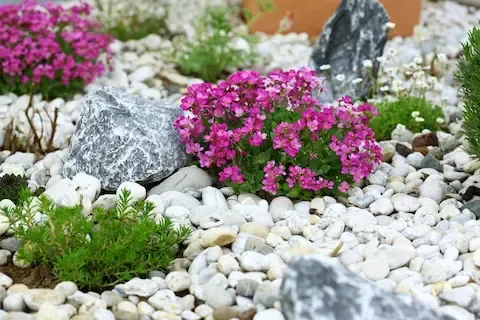
Decomposed Granite vs Gravel in Sunrise Manor NV Yards
Material Composition and Characteristics
Decomposed granite and gravel represent two distinct approaches to rock landscaping in Sunrise Manor yards. Decomposed granite forms naturally when granite breaks down over time, creating a mixture of small granite particles, clay, and sand that compacts into a firm, walkable surface. This material typically contains pieces ranging from fine dust to quarter-inch fragments, with the smaller particles acting as a binding agent when moisture is present.
Gravel consists of larger, angular or rounded rock fragments that remain loose and mobile. Common gravel types in the Mojave Desert region include river rock, crushed limestone, and volcanic cinder, with sizes typically ranging from three-eighths inch to two inches in diameter. Unlike decomposed granite, gravel does not naturally compact and maintains its individual stone characteristics over time.
The fundamental difference lies in how these materials behave underfoot and under weather conditions. Decomposed granite creates a unified surface that feels similar to packed dirt, while gravel maintains distinct stones that shift and move when walked upon.
Installation and Preparation Requirements
Decomposed granite installation requires careful preparation to achieve proper compaction. The base area needs excavation to a depth of three to four inches, followed by mechanical compaction of the subgrade. The decomposed granite is then installed in two-inch lifts, with each layer thoroughly wetted and compacted using a plate compactor or roller. This process ensures the fine particles bind together and create a stable surface.
Gravel installation proves more straightforward but requires different considerations. After excavating to the desired depth, landscape fabric is often installed to prevent weeds and soil migration. Rock Landscaping projects typically involve spreading gravel to an even depth and raking to achieve proper grade, but no compaction is necessary or desired.
Edge restraints become crucial for both materials but serve different purposes. Decomposed granite needs edging to prevent the compacted surface from cracking and breaking away at the borders. Gravel requires edging to contain the loose stones and prevent them from migrating into adjacent landscape areas or walkways.
Maintenance and Longevity Considerations
Maintenance requirements differ significantly between these two materials in Sunrise Manor's desert climate. Decomposed granite surfaces may develop minor cracks during extreme temperature swings, requiring occasional touch-up applications and re-compaction. Annual maintenance typically involves adding a thin layer of fresh material and re-compacting high-traffic areas. Weed control requires pre-emergent herbicides since decomposed granite can support plant growth when organic matter accumulates.
Gravel maintenance focuses on redistribution and replenishment. High-traffic areas may develop low spots that require additional material and raking. The loose nature of gravel makes it easy to refresh the appearance by simply raking or using a leaf blower to redistribute stones. However, gravel requires periodic replenishment as smaller pieces gradually work their way into the soil below.
Water drainage patterns affect both materials differently. Decomposed granite sheds water when properly compacted but can become muddy if the surface breaks down. Gravel provides excellent drainage but may experience erosion during heavy rainfall events that can wash away smaller stones and create uneven surfaces.
Cost Analysis and Value Considerations
Material costs for decomposed granite typically range from $30 to $50 per ton in the Las Vegas Valley, making it an economical choice for larger areas. Installation costs add $2 to $4 per square foot when professional compaction equipment and expertise are required. The total cost per square foot usually falls between $3 and $6, depending on site preparation needs and access for equipment.
Gravel prices vary widely based on stone type and source, ranging from $25 per ton for basic crushed rock to $80 per ton for decorative river rock or specialty aggregates. Installation costs are generally lower since no compaction is required, typically adding $1 to $2 per square foot for spreading and grading. Premium decorative gravels can push total costs higher despite easier installation.
Long-term value considerations favor decomposed granite for high-traffic areas due to its stability and lower replacement needs. For more information about material selection strategies, review the rock landscaping overview to understand how these materials fit into comprehensive landscape designs.
Climate Performance in Mojave Desert Conditions
Sunrise Manor's extreme temperature variations and low rainfall create specific performance challenges for both materials. Decomposed granite expands and contracts with temperature changes, potentially developing hairline cracks during summer heat exceeding 110 degrees Fahrenheit. The material's dust content can become problematic during high wind events common in the Mojave region, though proper compaction minimizes this issue.
Gravel performs consistently across temperature extremes since individual stones are not affected by expansion and contraction. However, the loose nature of gravel makes it susceptible to wind displacement during dust storms and high-wind events that frequently occur in the Las Vegas Valley. Lighter gravels like volcanic cinder require more frequent maintenance in windy locations.
Both materials handle the region's minimal rainfall effectively, but their behavior during occasional heavy downpours differs substantially. Decomposed granite can form temporary puddles on compacted surfaces but generally absorbs moisture well. Gravel provides immediate drainage but may experience stone displacement during water flow.
Aesthetic and Design Applications
Visual appeal varies significantly between these materials. Decomposed granite offers a clean, uniform appearance that works well in formal landscape designs and complements modern architectural styles popular in newer Sunrise Manor developments. The material is available in colors ranging from tan and gold to reddish-brown, allowing coordination with existing hardscape elements.
Gravel provides more texture and visual interest through varied stone sizes, shapes, and colors. River rock offers smooth, rounded forms in multiple color combinations, while crushed granite provides angular textures that create striking patterns under lighting. The individual stone visibility in gravel installations can enhance landscape designs that emphasize natural desert aesthetics.
Both materials integrate well with desert plants and xeriscaping principles essential for sustainable landscaping in the Mojave Desert. Decomposed granite creates an excellent backdrop for showcasing desert plants like agave and palo verde trees, while gravel can be used to create contrast zones and define planting areas within larger landscape schemes.
Professional Installation Recommendations
Successful installation of either material requires understanding local soil conditions and drainage patterns specific to Sunrise Manor properties. Clay-heavy soils common in some areas require additional preparation to prevent water retention issues that can compromise both decomposed granite compaction and gravel stability.
Professional assessment becomes particularly important when considering integration with existing irrigation systems and drainage solutions. Decomposed granite installations must account for sprinkler coverage and potential erosion points, while gravel applications require consideration of how landscape lighting and other hardscape elements will interact with loose stone surfaces.
The choice between decomposed granite and gravel ultimately depends on intended use, maintenance preferences, and design goals. High-traffic areas like walkways and entertainment spaces generally benefit from the stability of properly installed decomposed granite, while decorative areas and plant borders often showcase better with appropriate gravel selections that complement the overall landscape theme.
