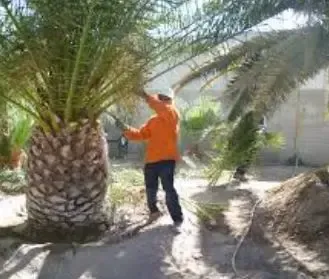
Tree Trimming for Sunrise Manor NV Palms and Mesquites
Tree trimming for palms and mesquites in Sunrise Manor requires specialized knowledge of desert species and local growing conditions. Your established canopy trees represent significant investments in property value and water conservation credits, making proper maintenance essential for long-term health and compliance with Southern Nevada Water Authority guidelines.
Palm Tree Trimming Fundamentals
Palm trees in Sunrise Manor face unique challenges from wind exposure along Lake Mead Boulevard and temperature fluctuations between desert valleys and urban heat islands. Proper trimming focuses on removing only completely brown, dead fronds while preserving the natural crown shape that protects the growing point.
Never remove green or yellowing fronds from palm trees, as these continue providing nutrients to the trunk and root system. The temptation to create a neat, symmetrical appearance by over-pruning can severely stress palms and make them susceptible to diseases common in Nevada's arid climate.
Date palms, Canary Island date palms, and Mediterranean fan palms each require different trimming approaches based on their growth patterns and seasonal cycles. Understanding these distinctions prevents the costly mistake of treating all palms identically.
Timing matters significantly for palm maintenance in Sunrise Manor's climate zone. Late spring trimming allows palms to recover during peak growing season, while fall trimming should be minimal to preserve insulation for winter protection.
Mesquite Tree Management Strategies
Mesquite trees serve as valuable windbreaks and shade providers throughout Sunrise Manor neighborhoods, but their aggressive growth requires strategic pruning to maintain desired form and prevent structural problems. These desert natives can quickly overwhelm spaces without proper management.
Focus mesquite trimming on removing water sprouts, crossing branches, and dead wood while maintaining the natural vase shape that provides optimal wind resistance. Mesquites respond well to selective thinning that opens the canopy for air circulation while preserving the tree's drought-adapted structure.
Root sprout management proves equally important for mesquites, as these trees readily produce new shoots from their extensive root systems. Regular removal of unwanted sprouts prevents mesquites from forming thickets that can encroach on neighboring properties or utility easements.
Mesquite pruning wounds heal quickly in Sunrise Manor's dry climate, making it possible to address structural issues without extended vulnerability to pests or diseases. However, avoid pruning during monsoon season when increased humidity can slow healing.
Seasonal Timing Considerations
Desert tree trimming schedules differ significantly from temperate climate recommendations. In Sunrise Manor, the optimal trimming window extends from late February through early May, when trees begin active growth but before extreme summer heat stress.
Summer trimming should be limited to emergency situations involving safety hazards or storm damage. The combination of high temperatures and trimming stress can severely compromise tree health, particularly for non-native species struggling with desert adaptation.
Fall trimming can be appropriate for light maintenance work, but avoid major structural pruning as trees prepare for winter dormancy. This timing works well for removing summer wind damage and preparing trees for winter wind exposure.
Winter trimming remains possible for desert-adapted species like mesquites, but palm trees should generally be left undisturbed during cooler months when their growth slows significantly.
Wind Damage Prevention
Sunrise Manor's position in the Las Vegas Valley creates wind tunnel effects that can damage improperly maintained trees. Strategic trimming reduces wind resistance while maintaining structural integrity needed to withstand desert windstorms.
Palm fronds should be trimmed to maintain natural wind-shedding angles rather than creating unnatural symmetrical patterns. This approach allows palms to flex with wind while preventing frond breakage that can damage the crown.
Mesquite canopy thinning removes interior branches that create wind resistance without providing structural support. This selective approach maintains the tree's natural form while reducing the sail effect that can lead to uprooting or major limb failure.
Regular inspection and maintenance of Tree Trimming schedules helps identify potential wind damage risks before they become safety hazards or property damage issues.
Water Conservation Compliance
Proper tree maintenance helps preserve eligibility for Southern Nevada Water Authority tree replacement credits and water-efficient landscape rebates. Healthy, well-maintained trees provide maximum cooling and wind protection benefits that support overall landscape water conservation goals.
Over-pruning can force trees to produce excessive new growth that requires additional water during establishment. Conservative trimming practices maintain established root-to-canopy ratios that support drought tolerance.
Dead or declining trees may need removal and replacement to maintain SNWA compliance for water-efficient landscapes. Regular maintenance helps identify trees that may be candidates for replacement before they become complete losses.
Documentation of proper tree care practices can support applications for landscape water credits and demonstrate compliance with water-wise landscaping requirements throughout Sunrise Manor developments.
Common Trimming Mistakes
Hurricane cuts, where palm fronds are removed in horizontal lines, create unnatural stress patterns and eliminate the tree's natural protection systems. This practice, while common, significantly reduces palm health and longevity in desert conditions.
Mesquite topping removes the tree's natural crown structure and forces vigorous regrowth that requires frequent maintenance. This approach creates weak branch attachments and destroys the tree's natural wind-resistant architecture.
Improper timing, particularly summer pruning of stressed trees, can trigger decline or death in desert conditions. Understanding species-specific timing requirements prevents costly tree losses.
Using inappropriate tools or techniques can create wounds that heal poorly in arid conditions, leading to pest infestations or structural weakness that compromises long-term tree health.
Professional Equipment Considerations
Palm tree trimming requires specialized climbing equipment and pruning tools designed for fibrous palm fronds. Standard pruning shears may not cut cleanly through palm material, leading to frayed wounds that invite pests.
Mesquite trimming benefits from sharp, clean-cutting tools that create smooth wounds capable of rapid healing. Dull or dirty equipment can introduce pathogens that cause branch dieback or whole-tree decline.
Safety equipment becomes particularly important when working around Sunrise Manor's power lines and property boundaries. Professional-grade equipment ensures work can be completed safely without compromising utility infrastructure.
Proper disposal of trimming debris follows local waste management guidelines and prevents the spread of pests or diseases to other landscape areas. Many desert pests overwinter in pruning debris left on-site.
Integration with Landscape Design
Tree trimming should complement overall landscape design rather than creating isolated maintenance decisions. Coordinating tree care with the decorative gravel piece and other hardscape elements creates cohesive outdoor spaces.
Canopy management affects understory planting opportunities and irrigation design. Strategic trimming can create filtered shade conditions that support additional landscape plants while maintaining water efficiency.
Property boundary considerations become important when trimming affects neighboring landscapes or shared spaces. Professional trimming ensures work complies with local ordinances and maintains good neighbor relationships.
Long-term landscape planning incorporates tree growth projections and maintenance requirements into design decisions, preventing conflicts between mature trees and other landscape elements or structures.
