Outdoor Lighting for Sunrise Manor NV Yards and Paths
Understanding Outdoor Lighting Options for Desert Landscapes
When you're planning outdoor lighting for your Sunrise Manor property, you're working with a unique desert environment that demands specific considerations. The Mojave Desert climate brings intense summer heat, dust storms, and dramatic temperature swings that can challenge standard lighting systems. Your lighting choices need to withstand 115-degree summer days, handle sudden windstorms that kick up fine desert sand, and continue performing when winter temperatures drop into the 30s.
Low voltage landscape lighting stands out as the most reliable option for desert conditions. These systems operate at 12 volts instead of standard 120-volt household current, making them safer around water features and more energy-efficient during those expensive summer months when your electric bill peaks. The reduced voltage also means less heat generation from the fixtures themselves, which matters when ambient temperatures already stress every component in your outdoor setup.
Solar lighting has evolved significantly for desert applications, though it requires careful selection. Quality solar fixtures now include batteries rated for extreme temperature ranges and panels designed to shed dust more effectively. However, you'll want to avoid cheap solar options that fail within months under Nevada sun exposure.
Path and Walkway Lighting Strategies
Your walkways and paths require consistent, even illumination that guides movement without creating harsh shadows or glare. In Sunrise Manor's desert setting, path lighting serves dual purposes: safety navigation and security deterrence. The open landscape typical of desert properties means lighting becomes more critical since natural barriers and vegetation provide less visual screening.
Bollard lights work exceptionally well for longer driveways and main walkways. Choose fixtures with sealed lens assemblies and corrosion-resistant finishes rated for desert conditions. Stainless steel or powder-coated aluminum options typically outlast other materials when facing constant UV exposure and temperature cycling.
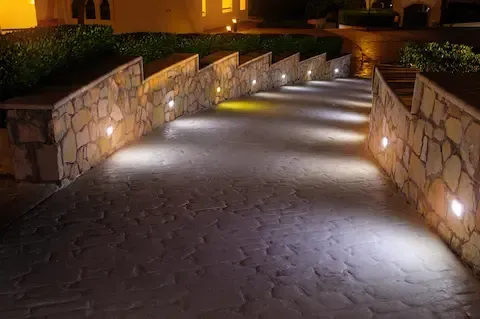
Step lights integrated into hardscape elements provide subtle guidance while maintaining the clean lines popular in desert landscaping. These flush-mounted fixtures protect the LED components from direct weather exposure while casting controlled light pools that define pathway edges without overwhelming the natural desert aesthetic.
For curved or irregular pathways common in xeriscaped properties, flexible strip lighting or small accent fixtures offer more design freedom. However, ensure any flexible components include UV-stable jackets rated for outdoor desert use, as standard indoor flexible lighting degrades rapidly under intense Nevada sun.
Yard Area Lighting and Landscape Accent Options
Desert landscaping presents unique opportunities for dramatic lighting effects. Your Outdoor Lighting strategy should emphasize the sculptural qualities of desert plants and hardscape elements while providing functional illumination for outdoor living areas.
Uplighting works particularly well with desert plants like agaves, barrel cacti, and architectural succulents. The dramatic shadows cast by these plants create striking visual effects against walls or fencing. Position uplights close to the base of specimen plants, using narrow beam angles to minimize light spillage and maintain the intimate scale appropriate for desert settings.
Wash lighting across textured walls or natural stone elements highlights the materials commonly featured in Sunrise Manor landscaping. Desert properties often incorporate stucco walls, natural stone, or decorative concrete that benefits from grazing light that emphasizes surface texture and color variations.
Tree lighting in desert landscapes requires special consideration since most desert-adapted trees have open canopies that don't provide the dense foliage typical in other climates. Palo verde trees, mesquites, and desert willows need carefully positioned fixtures that work with their natural branching patterns rather than trying to create artificial density through lighting.
Dark Sky Compliance and Light Pollution Considerations
Nevada's dark sky initiatives influence outdoor lighting choices throughout the region. While Sunrise Manor doesn't fall under the strictest dark sky ordinances, responsible lighting practices benefit both your property value and the broader community's enjoyment of the natural desert night sky.
Full cutoff fixtures direct light downward without upward spill, reducing sky glow while providing better ground-level illumination. These fixtures also improve security lighting effectiveness since they concentrate light where you need it rather than scattering it broadly.
Warm color temperatures between 2700K and 3000K work better in desert settings than cool white options. Warm light complements the earth tones dominant in desert landscaping while causing less disruption to local wildlife patterns. Many desert birds and small mammals are sensitive to lighting changes, and warmer temperatures minimize ecological impact.
Timer and motion sensor integration becomes especially valuable in desert climates where you want lighting available for extended outdoor living seasons but don't need constant illumination. Programmable systems allow you to adjust timing seasonally as daylight hours shift and your outdoor activity patterns change with temperature variations.
Installation and Maintenance Factors for Desert Conditions
Desert soil conditions significantly impact lighting installation approaches. Sunrise Manor's soil typically includes layers of hardpan caliche that challenge standard burial depths for low voltage wiring. Professional installers familiar with local conditions know where to expect these layers and plan wire routing accordingly.
Conduit protection becomes more critical in desert installations due to ground movement from temperature cycling and occasional settling. Direct burial cable rated for wet locations handles better than standard landscape wire when periodic irrigation creates localized wet conditions in otherwise arid soil.
Fixture mounting strategies must account for ground settling and frost heave effects. Even in the desert, winter temperature swings cause soil movement that can shift fixture alignment over time. Concrete footings or stabilized gravel bases help maintain proper fixture positioning through seasonal changes.
Access planning for maintenance becomes crucial given the harsh operating environment. Every fixture will eventually need lamp replacement, lens cleaning, or component service. Design your lighting layout with access paths that don't require walking through established plantings or over irrigated areas where mud might form.
Common Desert Lighting Mistakes and Misconceptions
Many property owners underestimate the maintenance requirements of outdoor lighting in desert conditions. Dust accumulation happens faster than in humid climates, and regular cleaning schedules prevent performance degradation and premature component failure. Quarterly cleaning of lens surfaces maintains light output and prevents overheating issues.
Oversizing transformers seems logical for extreme conditions, but it often creates more problems than benefits. Properly sized low voltage transformers run more efficiently and provide better voltage regulation. Oversized units waste energy and may not regulate voltage properly under varying loads, leading to premature LED failure.
Mixing different fixture types without considering color temperature consistency creates disjointed lighting schemes that look amateur rather than professionally planned. Desert landscapes benefit from cohesive lighting approaches that enhance the natural unity of xeriscaped environments.
Ignoring seasonal sun angle changes leads to poor fixture placement that works in winter but creates problems during summer months. The high summer sun angle in Sunrise Manor means fixtures that seem well-positioned in December may cause significant glare issues by July. Plan fixture locations considering year-round sun positions.
Local Considerations for Sunrise Manor Properties
Sunrise Manor's position in the Las Vegas Valley creates specific microclimatic conditions that influence lighting performance. The area's elevation and position relative to surrounding mountains affect both temperature patterns and wind exposure that impact fixture durability and performance.
Many Sunrise Manor properties feature large lots with significant street frontage, making security lighting a primary concern alongside aesthetic considerations. The combination of rural feel with suburban accessibility means lighting systems often need to cover more ground than typical suburban installations while maintaining proportional illumination levels.
HOA requirements in some Sunrise Manor neighborhoods include specific lighting guidelines that affect fixture selection and placement. Review any community standards before finalizing lighting plans, as some areas restrict fixture heights, require specific color temperatures, or limit the total amount of exterior lighting.
Utility considerations in Sunrise Manor include understanding NV Energy rate structures that make energy-efficient lighting choices more important during peak summer months. Time-of-use rates mean lighting systems that operate during peak hours carry higher operating costs, making timer controls and efficient LED systems more valuable investments.
Professional Planning and Long-term Value
Quality outdoor lighting systems in Sunrise Manor require balancing immediate installation costs with long-term performance and maintenance expenses. The harsh desert environment accelerates component degradation, making initial quality selections more cost-effective over the system's lifetime than attempting to save money on cheaper components that fail prematurely.
Professional design services become particularly valuable in desert environments where improper planning leads to expensive corrections. Experienced lighting designers understand local soil conditions, climate factors, and plant growth patterns that influence long-term system performance. They also coordinate with the tree trimming overview to ensure lighting positions work with mature plant sizes rather than installation-day conditions.
Warranty considerations take on added importance in desert climates where component stress levels exceed manufacturer standard test conditions. Look for companies that offer extended warranties specifically covering desert installations, and understand what maintenance requirements preserve warranty coverage.
System expandability planning allows for phased installations that spread costs while ensuring component compatibility. Desert properties often evolve over several years as landscaping matures and outdoor living areas develop. Planning for future expansion prevents costly system replacements when you want to add lighting zones or upgrade control systems.
