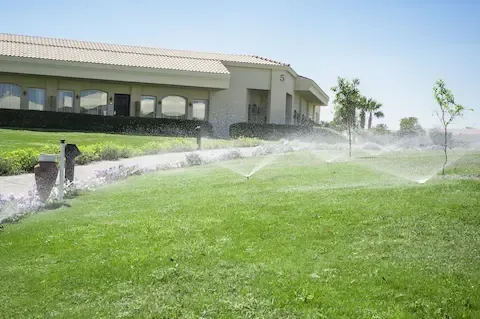
Smart Drip Controllers in Sunrise Manor NV LVVWD Areas
Watering restrictions in the Las Vegas Valley Water District zone covering Sunrise Manor are tighter than many homeowners realize. The district enforces seasonal schedules, day-of-week limits, and shoulder-month rules that can shift several times a year. A standard timer-based controller keeps no awareness of any of that. It runs when it is told to run, regardless of what LVVWD currently allows. Smart drip controllers solve that problem by pulling schedule data automatically and adjusting without any input from you. If you are irrigating shrubs, trees, or ground cover on a property in Sunrise Manor, upgrading to a smart controller is one of the most practical steps you can take before the next restriction cycle begins.
How Smart Controllers Differ from Standard Timers
A basic irrigation timer operates on a fixed schedule you program manually. It does not know what day it is in terms of restriction calendars, it does not know recent rainfall totals, and it does not adjust for temperature swings between summer and October. You program it once, and it runs that program indefinitely until you change it.
A smart drip controller connects to weather data services or on-site sensors and uses that information to modify run times and skip days automatically. Higher-end models connect to LVVWD's published watering schedules directly or allow you to enter your address group so the controller can calculate which days are permitted under current district rules. When LVVWD moves from the summer schedule to the shoulder-month or winter schedule, a properly configured smart controller adjusts on its own.
For Sunrise Manor properties, this matters because the area sits within a district that enforces strict day-of-week restrictions, and violations carry fines that escalate on repeat offenses. A smart controller removes human error from the compliance equation.
LVVWD Schedule Groups and What They Mean for Your System
LVVWD assigns properties to watering groups based on address. Each group has designated permitted days, and those days change depending on the season. During summer months, drip irrigation is typically permitted more frequently than spray irrigation. During the shoulder months of spring and fall, permitted frequency drops. In winter, outdoor irrigation is often restricted to once per week or prohibited on certain days entirely.
If your smart controller allows you to input your LVVWD group number, the device can enforce those permitted days automatically. Some controllers go further and use the district's ET-based recommendations to calculate how long each zone should run based on recent temperature and humidity data. This is particularly useful for drip zones covering desert-adapted shrubs, which can be damaged by overwatering as easily as by drought stress.
Sunrise Manor's climate creates wide swings between seasons. A controller that adapts run time by percentage based on monthly ET factors will consistently apply less water in October than in July, without you touching the schedule.
Models That Qualify for SNWA and LVVWD Rebates
The Southern Nevada Water Authority offers rebates on qualifying smart controllers purchased for residential and commercial properties. To qualify, the controller must typically meet WaterSense certification standards. WaterSense-labeled controllers are tested to demonstrate they reduce water use compared to time-based systems without sacrificing landscape health.
Rebate amounts vary and are subject to program funding availability, but in recent program cycles SNWA has offered rebates ranging from modest per-controller credits up to amounts that offset a significant portion of hardware cost. Certification status matters for inspection purposes as well. If an LVVWD inspector examines your system, a WaterSense-certified controller on a properly installed drip system is evidence of good-faith compliance.
Models commonly used in Sunrise Manor installations that have carried WaterSense certification include the Rachio 3, the RainBird ST8I-WIFI, and the Hunter Hydrawise HC series. These controllers support app-based management, weather intelligence, and zone-by-zone scheduling with soil type and plant category inputs. Availability and rebate eligibility should be confirmed at time of purchase since program rules update annually.
Installation Considerations for Drip-Specific Zones
Smart controllers designed for drip irrigation differ from those built primarily for spray systems. Drip zones operate at lower flow rates and pressure, and smart scheduling for drip needs to account for the fact that emitters deliver water slowly and directly to root zones. Run times for drip are measured differently than for spray heads, and a controller that treats all zones identically will not optimize drip performance.
When setting up a smart controller on a Sunrise Manor property, confirm that each drip zone is entered correctly into the controller's configuration. This means specifying the zone type as drip, entering the approximate number of emitters or the total flow rate, and selecting the appropriate plant types for each zone. Desert-adapted plants and turf have different water requirements, and a smart controller can only allocate correctly if it knows what it is watering.
Pressure-compensating emitters are recommended throughout Sunrise Manor drip systems because the area's elevation changes and municipal supply pressure can vary enough to affect non-compensating emitter output. A smart controller managing a system with pressure-compensating emitters will deliver far more consistent results than one paired with mismatched hardware.
For full drip system setup and zone configuration, Irrigation Systems installation professionals familiar with LVVWD requirements can handle the wiring, zone labeling, and initial smart controller programming as part of a complete service.
Passing LVVWD Inspections with a Smart System
LVVWD conducts both scheduled and complaint-driven irrigation inspections. An inspector will typically look for evidence of watering on non-permitted days, runoff leaving the property, visible system damage creating waste, and backflow prevention compliance. A smart controller that is properly configured helps with the first two issues directly.
When an inspector approaches a property using a smart system, the controller's log can show historical watering events. Most smart controllers store run history in the app. If a complaint was filed on a specific date, you can pull the log and verify whether the system ran on that day and whether that day was a permitted watering day. That documentation can be the difference between a dismissed complaint and a fine.
For Sunrise Manor properties subject to HOA rules layered on top of LVVWD restrictions, smart controllers also allow easy schedule adjustments to meet HOA-specific quiet hours or aesthetic requirements without losing LVVWD compliance.
Understanding your permitted watering days and seasonal run time adjustments is easier when you review the summer drip schedule notes alongside your controller's app settings before each season change.
Timing the Upgrade
The best time to install a smart controller in Sunrise Manor is before a restriction period begins, not after a violation. Late summer and early fall are common windows when homeowners discover their current timer ran on a restricted day during the peak season. By that point, the fine has already landed.
Installing a smart controller in winter or early spring, when irrigation demand is low and schedules are simpler, gives you time to configure zones correctly, verify weather integration, and test the system before summer heat pushes demand up. It also gives you time to submit rebate documentation to SNWA while funding remains available in the current program year.
Smart controllers are not a guarantee of zero water bills, but for Sunrise Manor properties navigating LVVWD's layered schedule rules, they remove the primary source of accidental violations and create a system that adapts to restrictions rather than ignoring them.
